
Protecting Your Deck and Fence Before Winter
A deck or wood fence can look perfectly sound in early fall while already absorbing the moisture that leads to peeling, cracking, mildew, and rot. Once repeated rain, frost, and freeze-thaw cycles arrive, small weaknesses in the finish can become expensive repairs.
For homeowners around Newark and central Ohio, the goal is not simply to apply another coat before cold weather. Proper protection requires inspecting the wood, correcting minor problems, preparing the surface carefully, and choosing a coating suited to Ohio weather. This guide explains when to act, how to tell whether your wood needs attention, and what goes into a durable deck staining and painting or fence painting and staining project.
Signs Your Deck or Fence Needs Protection
A failing finish is not always obvious. Inspect horizontal deck boards, stair treads, rail caps, fence posts, and other areas where water tends to collect. Common warning signs include:
- Water soaking into the wood instead of forming beads on the surface
- Faded or uneven color, especially in areas exposed to direct sun
- Peeling, flaking, or bubbling paint or solid-color stain
- Gray, dry-looking boards or raised wood grain
- Green or black mildew staining
- Splinters, surface cracks, loose fasteners, or rough handrails
- Soft areas near deck posts, fence posts, or board ends
A simple water test can help. Sprinkle a small amount of clean water on several boards. If it remains beaded after several minutes, the existing finish may still be protecting the surface. If it darkens the wood and absorbs quickly, the deck may need cleaning and sealing.
Pay particular attention to the shaded side of a fence and areas beneath planters or outdoor rugs. These spots dry slowly and can hold moisture long after the rest of the structure appears dry. Rotting or structurally unstable wood should be repaired before any coating is applied; stain cannot restore strength to a damaged board.
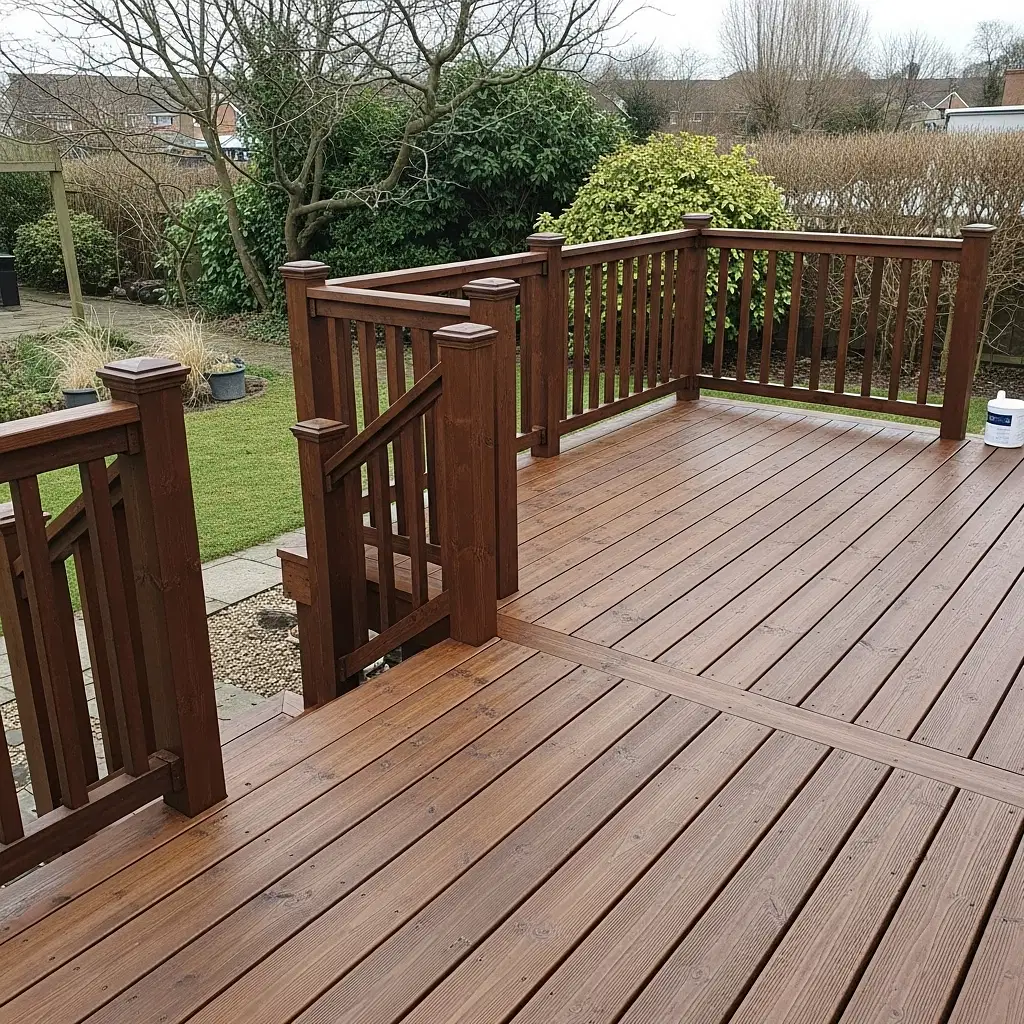
When Is the Best Time to Stain Outdoor Wood?
Late spring through early fall generally offers the most workable conditions, but the forecast matters more than the calendar. Wood needs time to dry after rain or washing, and the stain needs an appropriate temperature and moisture window to cure. Many products perform well at moderate temperatures, often around 50–90°F, but the manufacturer’s label should always control the decision.
Avoid staining when:
- Rain is expected before the required drying or curing time has passed
- Overnight temperatures may fall below the product’s minimum
- Morning dew will keep the surface damp
- Strong direct sun could make the stain dry too quickly
- Humidity is high enough to slow curing significantly
Central Ohio’s quick temperature swings can make exterior scheduling tricky. A sunny afternoon does not necessarily mean the wood is ready, particularly after several damp days. A moisture meter provides a more dependable answer than touching the surface.
For most homeowners, the ideal approach is to schedule an inspection before late-fall cold snaps become common. Waiting until the final warm weekend can create a rush, and an unsuitable forecast may leave too little time for proper preparation. If conditions are not safe for coating, it is better to postpone than trap moisture under a finish that will fail prematurely.
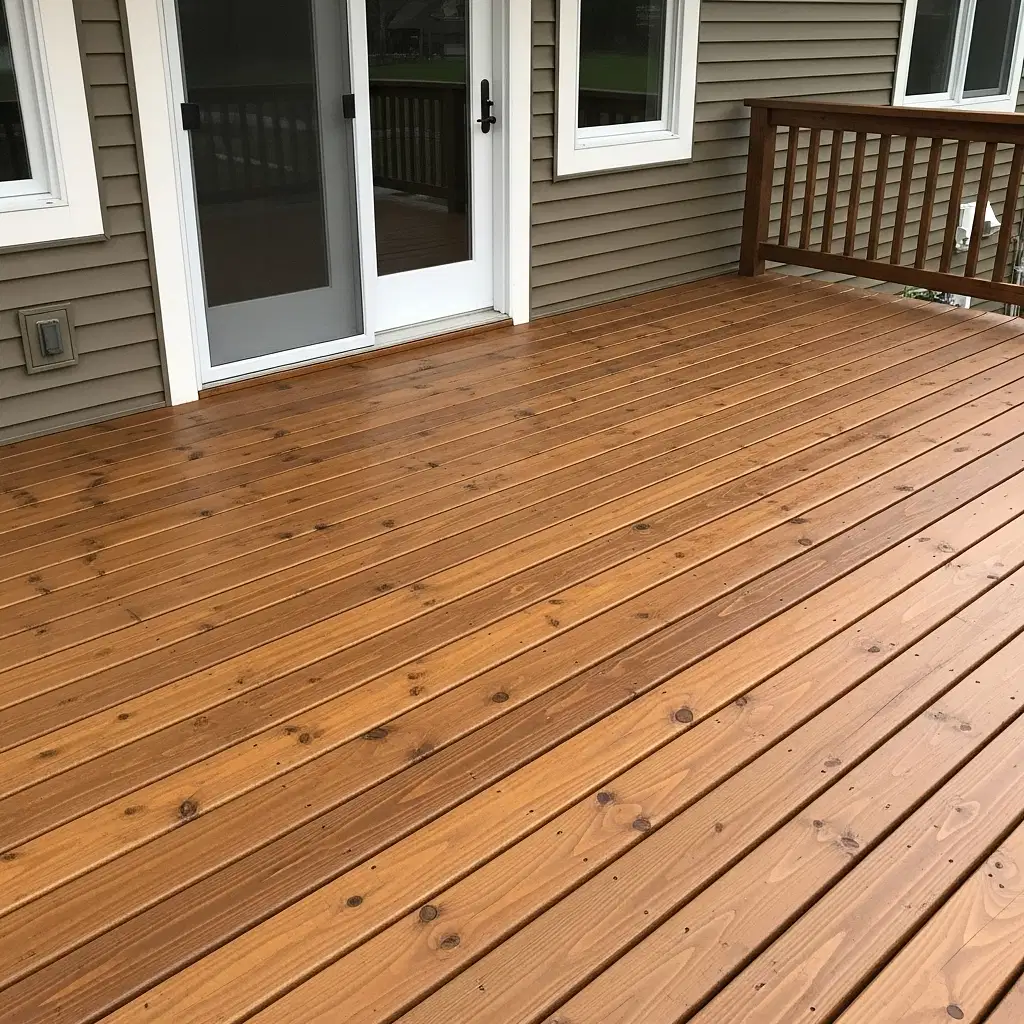
How to Prepare a Wood Fence or Deck for Staining
Preparation is the foundation of a long-lasting result. Applying stain over dirt, mildew, loose coating, or damp wood may look acceptable initially, but adhesion and penetration will suffer.
1. Clear and inspect the area
Move furniture, grills, planters, and outdoor rugs. Trim vegetation away from fence boards and cover nearby landscaping as appropriate. Check for protruding nails, loose screws, cracked boards, and unstable railings.
2. Clean the surface
Remove leaves and debris, then wash away embedded dirt, algae, and mildew with a wood-appropriate cleaner. Pressure washing can help, but excessive pressure or holding the tip too close can scar boards and raise the grain. Gentle cleaning followed by adequate drying is safer than aggressive blasting.
3. Remove loose finish
Peeling paint or solid stain must be scraped and sanded until the remaining edges are sound. Previously stained wood may also require sanding or stripping if the old product prevents a new coating from penetrating evenly.
4. Let the wood dry
This step cannot be rushed. Board surfaces may feel dry while retaining moisture internally. Drying time varies with shade, humidity, temperature, and recent rainfall, so professional moisture testing is useful.
5. Sand and remove dust
Smooth splinters, rough handrails, raised grain, and sharp coating edges. After sanding, remove all dust before applying the new finish. These steps are central to quality wood staining, where the final appearance depends heavily on the condition of the underlying surface.
Choosing Between Stain, Sealer, and Paint
The right product depends on the wood’s condition, the previous coating, and the appearance you want.
- Clear or lightly tinted sealer preserves a natural appearance but generally offers less UV protection and may require more frequent maintenance.
- Semi-transparent stain adds color while allowing grain to remain visible. It works well on attractive wood that has been prepared evenly.
- Solid-color stain provides stronger color coverage and can help unify boards with uneven tones, although future peeling requires careful maintenance.
- Exterior paint creates an opaque film and broad color choice, but it must be applied over a compatible, well-prepared surface. Horizontal deck boards are especially demanding because they receive foot traffic and hold water.
High-quality products designed for exterior wood are worth considering because decks and fences face rain, sun, humidity, and freezing temperatures. Lower-VOC options are also increasingly available for homeowners who prioritize reduced odors and environmental impact. Product selection should still account for durability, existing coatings, and manufacturer requirements.
If your neighborhood or homeowners association regulates exterior colors, obtain approval before work begins. Also request a detailed estimate that separates cleaning, repairs, sanding, materials, and coating application. Deck size, fence length, wood condition, accessibility, and the old finish all affect price, so square-foot averages rarely tell the whole story.
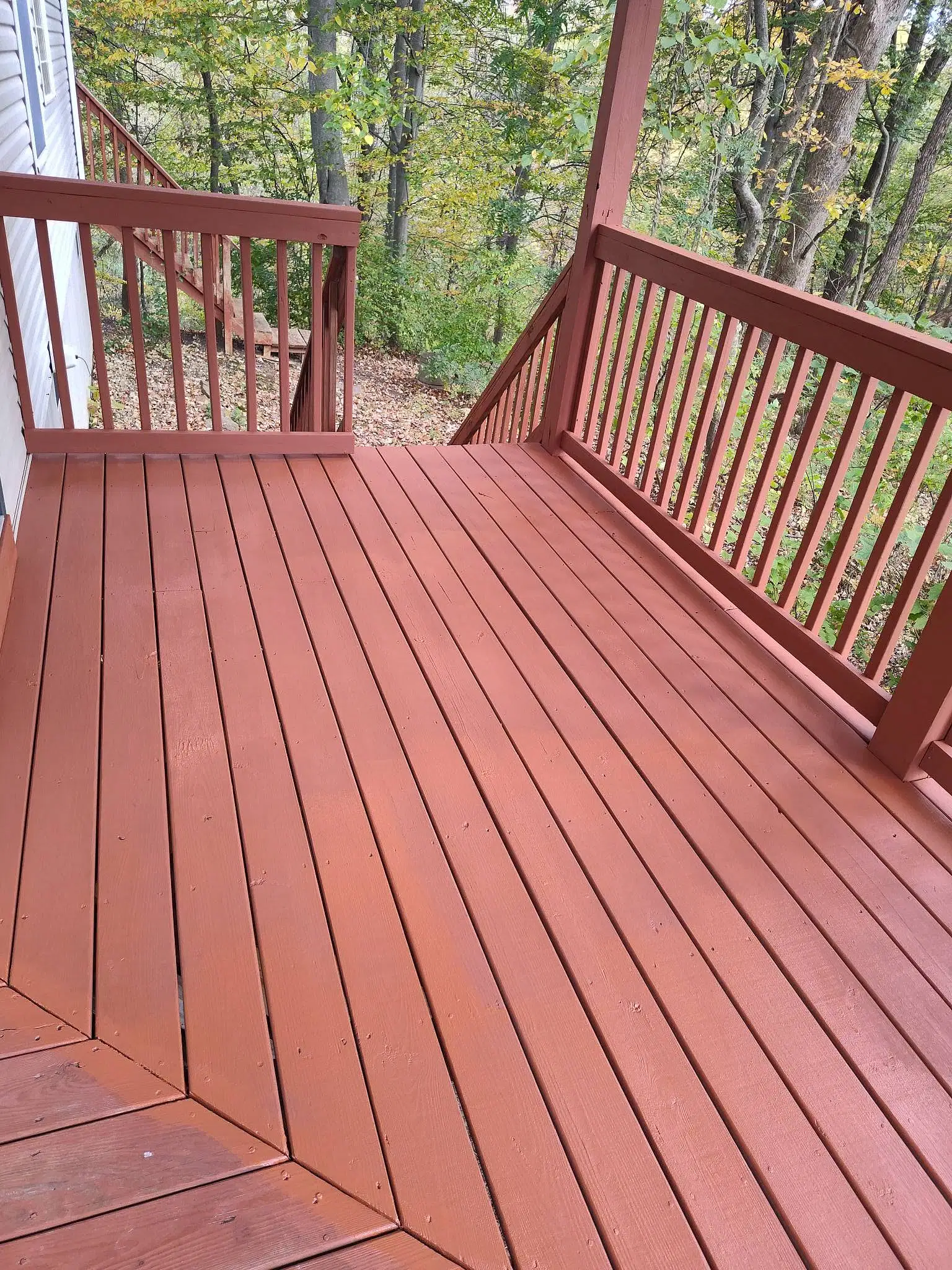
Protect Your Outdoor Wood Before the Freeze
Winter protection starts with three practical steps: inspect the wood early, wait for genuinely suitable weather, and never shortcut cleaning or drying. A properly selected and applied finish helps repel moisture, reduce UV damage, and limit the cracking caused by seasonal expansion and contraction. It also makes routine spring cleaning easier.
Whoa-Man Painting takes a personal, detail-focused approach, including free on-site consultations that allow the surface condition and project scope to be evaluated directly. Homeowners can receive clearer guidance about preparation, product choices, and realistic scheduling instead of relying on a one-size-fits-all remote price.
If your deck has stopped beading water or your fence is faded and absorbing moisture, contact Whoa-Man Painting to discuss deck staining and painting, fence painting and staining, or other wood painting and small exterior services. The team serves Newark and surrounding communities, with an emphasis on careful craftsmanship, transparent estimates, and eco-conscious options when appropriate.